Mint-Tin Demonolatry
Experiments & Magical Secrets

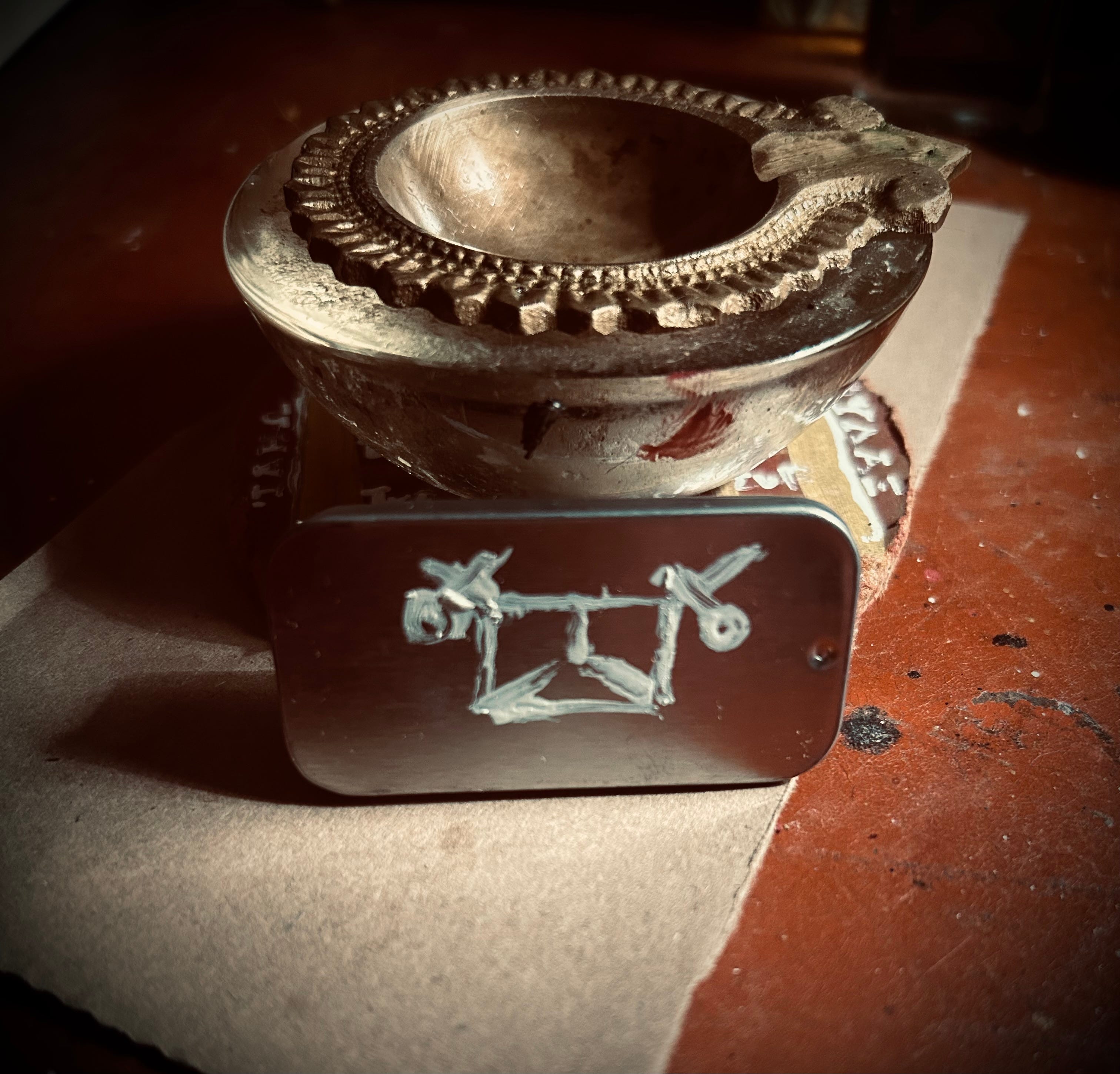
Mint-Tin Demonolatry: Experiments & Magical Secrets
One of the persistent confusions encountered by those newly initiated into the study of operative magic concerns the internal logic of the grimoires themselves. These texts—whether the Clavis Salomonis, the Grimorium Verum, the Hygromanteia, or the so-called Bibliothèque Bleue manuals—present a startling juxtaposition: high ecclesiastical rhetoric sits beside scholastic instruction, which in turn gives way to practical recipes of startling mundanity. This juxtaposition is not accidental. It reflects the true genre of these texts: not merely ritual manuals, but compendia of applied knowledge, wherein magical, medical, cosmological, and practical domains are unified under a single operative worldview. The Grimoire of Pope Honorius is especially explicit on this point, defining the grimoire as a “grammar” of magical information and techniques, while also noting that Books of Secrets consist of simple charms using common herbs and household objects.
As I noted previously, one of the things many people new to the study of esotericism and operative magic find confusing is precisely this juxtaposition between elevated ecclesiastical diction, scholastic form, and practical instructions ranging from spirit work to recipes, remedies, and counsel for daily need. The confusion is understandable only if one assumes that grimoires belong to a single literary category. They do not. They belong to a mixed textual world in which liturgy, natural philosophy, household medicine, treasure lore, and spirit technology coexist without embarrassment.
